A Field Near Heliopolis · 1819
The seed that became
Egyptian Cotton
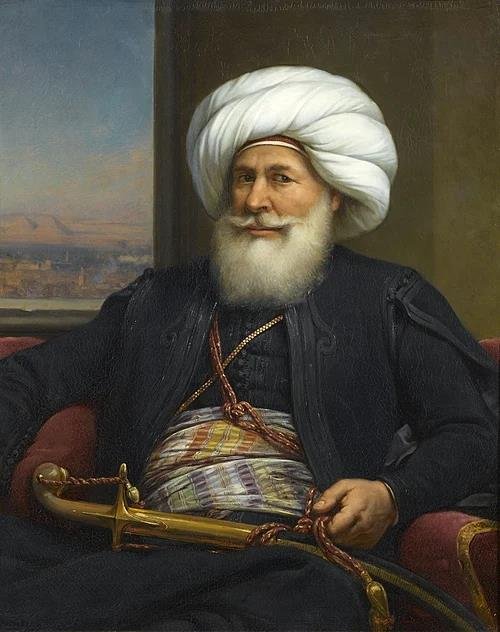 The private garden, Cairo · where it began
A Frenchman, a Garden, and a Wager
The story begins with Louis Alexis Jumel, a French textile engineer working in Egypt, who set out to persuade Muhammad Ali Pasha of something unproven: that a cotton variety growing quietly in a private Cairo garden could transform the country's entire agricultural output.
The garden belonged to Maho Bey El Orfali, a retired Turkish-Egyptian official who had once governed Dongola and Sennar. Jumel visited, gathered everything Maho Bey knew about the plant, and took some of its seeds home with him.
After running his calculations, Jumel brought the Pasha a plan to grow state revenue — and a price tag of 20,000 dollars. The Pasha chose caution over ambition, agreeing to less in exchange for surer results.
"So the engineer, associating himself with a local merchant, took a small lot of ground at the village of Matareya, near the Obelisk of Heliopolis, and commenced a small plantation."
Three Bales, Then a Nation's Fields
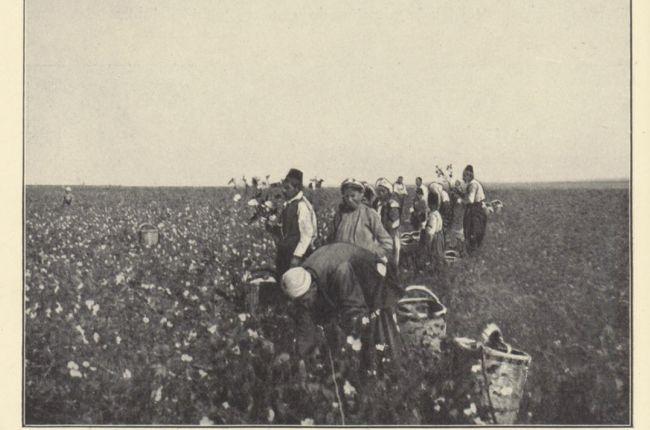
The first harvest, in 1820, produced just three bales — modest enough, yet the reports that followed their shipment to Trieste were promising enough to change everything. The Pasha handed Jumel the direction of large-scale cotton plantations across the country.
By 1822, output had grown to roughly 1,500 tons. The staple was already remarkably fine, though still more uneven and less clean than the crops that would follow.
Villages built rough presses to pack the harvest, but the machinery proved unreliable. Alexandria's merchants stepped in with hydraulic presses, re-pressing the bales to a standard worth exporting.
 The private garden, Cairo · where it began
 The private garden, Cairo · where it began
A Name Reaches the Lancashire Mills
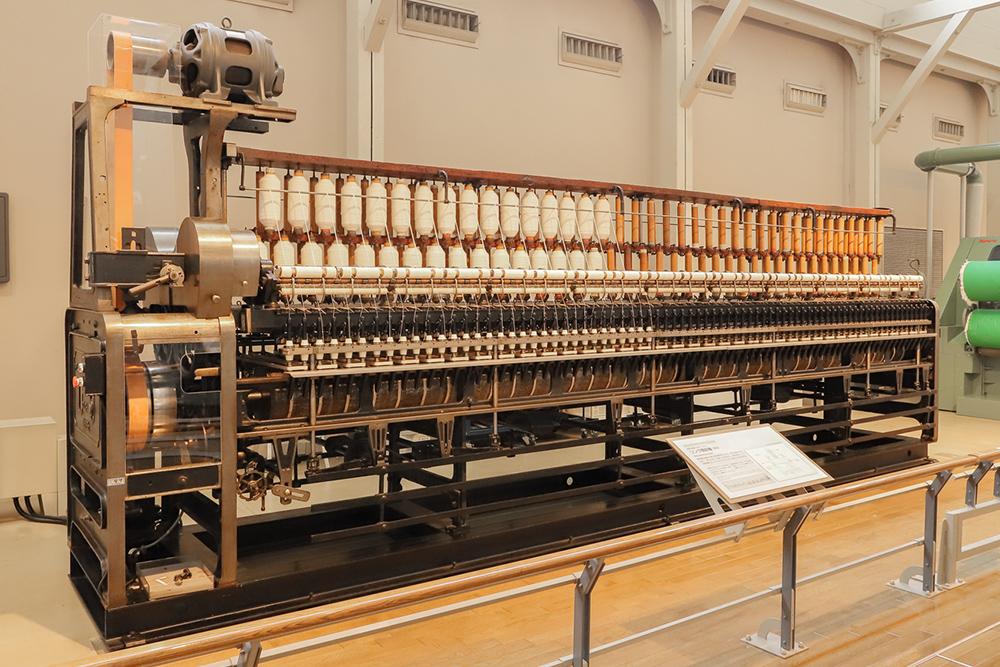
The cotton took on a name of its own — Jumel, or Mahō — and found eager buyers across Europe. In England, only the Lancashire mills, fitted with the newest machinery, were equipped to work a fiber this fine.
The 1823 crop nearly doubled again, to about 10,000 tons, and by then its cultivation was permanently fixed in Egypt's economy. That year's cotton came out cleaner than the last, though slightly less fine.
It was a signal, not a setback: the fiber needed new seed stock, or a different approach to cultivation, to reach its full potential.
The Seed That Perfected It
In 1827, Muhammad Ali Pasha imported Sea Island cotton seed. Crossed with Egypt's existing stock, it lifted the fiber to a new level of quality — and revealed something about the land itself: Lower Egypt, and above all the Damietta branch of the Nile, held the districts best suited to growing it.
The finest seed in the world, met with an exceptional environment, created the ideal conditions for the most precious cotton on Earth.
 The Damietta branch of the Nile · where the fiber was perfected
For nearly two centuries since, that result has been proven again and again — in every bale of Egyptian cotton grown along the Nile.
1819 — Present · Alexandria Cotton Exporters Association